
Whether you’re cleaning out a garage, preparing for a move, renovating your home, or simply getting rid of unwanted clutter, one of the first questions you may ask is: How much does junk removal cost?
The answer depends on several factors, including the amount of junk, the type of materials being removed, your location, and the specific services required. Understanding how junk removal companies calculate their prices can help you budget effectively and avoid unexpected expenses.
In this complete pricing guide, we’ll break down the factors that influence junk removal costs, explain common pricing models, and provide tips for getting the best value from a junk removal service.
What Is Junk Removal?
Junk removal is a professional service that helps homeowners, renters, and businesses dispose of unwanted items. Rather than handling the lifting, hauling, transportation, and disposal yourself, a junk removal company takes care of the entire process.
Items commonly removed include:
- Old furniture
- Appliances
- Electronics
- Mattresses
- Yard waste
- Construction debris
- Household clutter
- Office equipment
Many companies also recycle or donate reusable items whenever possible.
Average Junk Removal Costs
The cost of junk removal varies significantly depending on the project size.
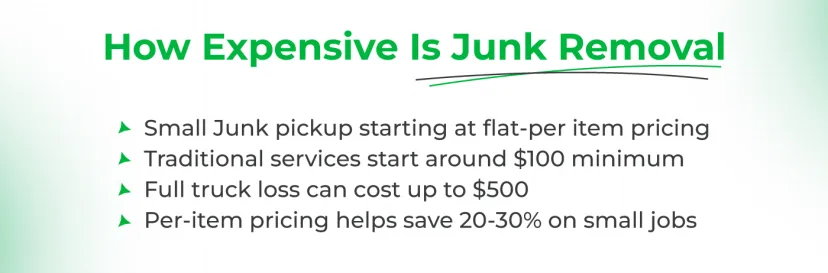
In general, most homeowners can expect to pay anywhere from $100 to $800 or more for professional junk removal services.
Smaller jobs involving a few items may cost less, while large cleanouts or construction debris removal projects can exceed several hundred dollars.
Typical pricing often falls into these categories:
| Project Size | Estimated Cost Range |
|---|---|
| Small Pickup | $100 – $250 |
| Medium Load | $250 – $500 |
| Large Load | $500 – $800+ |
| Full Property Cleanout | $1,000+ |
Keep in mind that these figures are estimates and may vary by region and service provider.
Factors That Affect Junk Removal Costs
Several variables determine the final price of a junk removal project.
1. Volume of Junk
The amount of space your items occupy in the removal truck is often the most important pricing factor.
Many companies charge based on:
- Fraction of a truckload
- Half truckload
- Full truckload
The more space your items take up, the higher the cost will be.
For example, removing a single couch costs significantly less than clearing out an entire garage.
2. Type of Materials
Not all junk is treated equally.
Certain materials require special handling, recycling, or disposal procedures.
Items that may increase costs include:
- Refrigerators
- Air conditioners
- Electronics
- Tires
- Construction debris
- Hazardous materials
Some companies charge additional fees for these items due to environmental regulations and disposal requirements.
3. Weight of the Load
In addition to volume, weight can affect pricing.
Heavy materials such as:
- Concrete
- Bricks
- Roofing shingles
- Dirt
- Gravel
often cost more to dispose of than lightweight household items.
Disposal facilities frequently charge by weight, which can increase the overall service cost.
4. Labor Requirements
The amount of labor involved also impacts pricing.
A straightforward curbside pickup is usually less expensive than removing items from:
- Basements
- Attics
- Multi-story buildings
- Tight spaces
Large, bulky, or difficult-to-access items require more time and effort from the removal team.
5. Location
Junk removal costs can vary depending on where you live.
Urban areas often have higher labor and disposal costs than rural locations. Local landfill fees, recycling regulations, and transportation expenses may also influence pricing.
Obtaining quotes from companies in your area is the best way to determine local rates.
Common Junk Removal Pricing Models
Most junk removal companies use one of three pricing structures.
Volume-Based Pricing
This is the most common method.
Customers pay according to how much truck space their junk occupies.
Benefits include:
- Easy price estimates
- Transparent billing
- Suitable for mixed-item loads
Many residential junk removal jobs are priced this way.
Item-Based Pricing
Some companies charge per item.
Examples include:
- Mattress removal
- Couch removal
- Refrigerator removal
- Appliance disposal
This model works well for customers who only need a few items removed.
Hourly Pricing
Less commonly, some providers charge by the hour.
This approach is often used for:
- Property cleanouts
- Construction site cleanup
- Commercial projects
Labor-intensive jobs may be better suited to hourly pricing structures.
Cost Examples for Common Items
Although prices vary by location and company, here are some general examples:
Furniture Removal
- Sofa: $75–$200
- Dining table: $75–$150
- Recliner: $50–$100
Appliance Removal
- Refrigerator: $100–$250
- Washing machine: $75–$150
- Dishwasher: $50–$100
Mattress Disposal
- Twin mattress: $50–$100
- Queen mattress: $75–$150
- King mattress: $100–$200
Yard Waste Removal
- Small load: $100–$250
- Large load: $300–$600
These estimates can vary significantly depending on local conditions.
Additional Fees to Watch For
While many companies provide upfront pricing, it’s important to ask about potential extra charges.
Possible fees may include:
- Heavy material surcharges
- Extended labor fees
- Stairs or difficult access fees
- Long-distance hauling fees
- Hazardous material disposal fees
- Same-day service charges
Requesting a detailed quote beforehand can help prevent surprises.
How to Save Money on Junk Removal
There are several ways to reduce junk removal costs without sacrificing convenience.
Sort Items Before Pickup
Separating recyclable materials, donations, and trash can reduce labor time and disposal expenses.
Donate Usable Items
Furniture, clothing, and household goods in good condition may be accepted by local charities.
Donating items reduces the amount of junk that needs professional removal.
Compare Multiple Quotes
Prices can vary between providers.
Request estimates from at least three companies before making a decision.
Combine Items into One Pickup
Scheduling a single large pickup is often more cost-effective than arranging multiple smaller appointments.
Is Professional Junk Removal Worth the Cost?
For many homeowners and businesses, the answer is yes.
Professional junk removal offers several advantages:
- Saves time
- Eliminates heavy lifting
- Reduces injury risk
- Ensures proper disposal
- Supports recycling and donation efforts
- Provides convenience during stressful projects
When compared to renting a truck, making multiple landfill trips, and handling disposal independently, professional services can often provide excellent value.
Conclusion
Junk removal costs vary depending on the size of the project, the type of materials being removed, labor requirements, and local disposal fees. While small jobs may cost around $100, larger cleanouts can exceed several hundred dollars.
Understanding how pricing works allows you to plan ahead and choose the service that best fits your needs and budget. By comparing quotes, organizing your items, and working with a reputable company, you can make the junk removal process both affordable and efficient.
Whether you’re clearing out a single room or an entire property, professional junk removal can be a worthwhile investment that saves time, reduces stress, and helps create a cleaner, more organized space.